Follow us:
DR. BICKMORE'S YA WEDNESDAY
  • Wed Posts
  • PICKS 2026
  • Con.
  • Mon. Motivators 2025
  • WEEKEND PICKS 2024
  • Weekend Picks 2021
  • Contributors
  • Bickmore's Posts
  • Lesley Roessing's Posts
  • Weekend Picks 2020
  • Weekend Picks 2019
  • Weekend Picks old
  • 2021 UNLV online Summit
  • UNLV online Summit 2020
  • 2019 Summit on Teaching YA
  • 2018 Summit
  • Contact
  • About
  • WEEKEND PICKS 2023
    • WEEKEND PICKS 2023
  • Bickmore Books for Summit 2024


Check out our weekly posts!

Stay Current

Read Any Good Dissertations, Lately?

7/29/2026


Jeffrey S. Kaplan, PhD, is Associate Professor Emeritus in the School of Teaching, Learning, and Leadership in the College of Community Innovation and Education, University of Central Florida, Orlando and Senior Adjunct Professor/Dissertation Chair/Methodologist for College of Doctoral Studies, Grand Canyon University, Phoenix, Arizona. His research interests include the teaching of reading and writing, and specifically the teaching of young adult literature across the curriculum. Dr. Kaplan is Past President of the Assembly on Literature for Adolescents (2012-13), a division of the National Council Teachers of English and the co-editor of Teaching Young Adult Literature Today: Insights, Considerations and Perspectives for the Classroom Teacher (Rowman & Littlefield, 2012, 2016) and Chair National Council Teachers of English Standing Committee Against Censorship (2014-17). He can be reached at [email protected]  
Picture

Read Any Good Dissertations, Lately? by Jeffrey S. Kaplan

Read any good dissertations, lately? I have. In my retirement (achem) years, I spend my days reading, writing, traveling, hiking, walking, and reading dissertations. As an adjunct faculty member with the College of Doctoral Studies of Grand Canyon University (Phoenix, Arizona), I have the privilege and honor of working with graduate students pursuing a doctoral degree. Although the disciplines vary, the objective is always the same – the pursuit of a noble idea.
             
As a faculty member for nearly thirty years in the College of Education and Community Innovation at the University of Central Florida, Orlando, I taught undergraduate and graduate students preparing to become teachers, administrators, and educational leaders. I served on honors thesis and dissertation committees, each underscored by dedicated students and teachers empowered with the notion – that ‘truth’ matters. The pursuit of scholarship – for the sake of scholarship is a lonely pursuit – but that doesn’t make it any less noble or worthy.
           
I bring the notion of ‘truth’ and ‘nobility’ up for a reason. We are under attack. Scholars, academics, and students – all desiring to know more about their subject matter – and to separate what is known from what is not known – are seemingly treading water in an arena where ‘truth’ becomes susceptible to public opinion. And ‘public opinion’ becomes subject to ‘whim.’
           
Do you think it is true? Well so, be it.
           
What does this have to do with young adult literature? Plenty.

I have always been attracted to people who have gone to the wall for an ‘idea.’ Money is important – and we all know that when it comes to paying the ‘rent’, noble ideas can always go so far. But when it comes to exploring the truth – and those who have the privilege to do so – academics, scientists, reporters, - the pursuit of the truth is an ambition filled with complexity and desire that few can dispute has merit beyond words
.
 To stand next to someone who has devoted their life to an idea – no matter how tenuous and vague that idea might be – is awesome. Where would we be without Galileo? Einstein? Martin Luther King, Jr? Judy Blume? Or Robert Cormier?

Robert Cormeir

Robert Cormier, you say? Robert Cormier was an American writer and journalist (1925 – 2000) known primarily for his ground-breaking novel, The Chocolate War (Pantheon Books, 1974) about one teen’s lonely and embattled quest to defy a request to comply with his private school’s culture and fundraiser. Refusing to sell chocolates for an annual school fundraising event, Jerry, a freshman attending a fictional Catholic high school, defies convention and refuses to sell – in direct confrontation to students and an administrator who he senses is using intimidation to force his cooperation.
           
Because of The Chocolate War’s frank language, violence, and sexual ponderings, this haunting fictional work of adolescent angst remains consistently on the lists of top challenged books for young adults. After all, open defiance of cultural norms is always a safe bet for having a book land on a list of works most censored by adults refusing to let kids reads work of significant consequence. And this work was no exception.
          
​(I know. My mother, a seventh-grade English teacher, taught this book to her students – but not before receiving permission from her administrators and parents alike. Better to be safe, than jobless..) 
Picture

Dissertations and the Pursuit of Truth

And so it is with scholarship. The truth matters. I chair and review dissertations – whether they be in education, health, psychology, or business – that for the most part, research issues of social justice. The students I work with – many of them educators, nurses, social workers, business owners, and the like – are all imbued with a sense of purpose and desire to pursue a noble ambition for its own sake. They want to make their mark in the world – by researching, writing, and sharing – a personal and professional pursuit of their version of what is true and right and just.
           
And nothing could be ‘nobler.’

The same is true with the many educators and scholars I have known who are devoted to the study of young adult literature. Their lives – and their stories – remain most impressive to both those who know them well – and those who know them for the good work they have done – and continue to do. They – meaning the professionals who share at local, state and national conferences – and contribute to state, national, and international peer-reviewed journals – do so not for monetary reward – or even recognition – but, for the glory of sharing the truth to those who care – and those who aspire to do the same.

Dissertation writing is not an easy task. As I tell my students, writing a dissertation is a long, technical document – which comes with its own vagaries and stylistic peculiarities. No two dissertations are the same and no two dissertations will remain immutable. Research is always changing – and today’s version of what is true and good is always changing. What we know today to be relevant and real, will often be surpassed tomorrow by a new discovery or new author.

Yet, what remains constant is the pursuit of the ‘truth.’  And what that means to our field of study – young adult literature and the teaching of young adult literature – is our guiding “north star.’ True, our teaching is always being challenged – but our vision of what is true and good is always noble and worth pursuing.

Recent Dissertations about Young Adult Literature

A quick glance at the handful of recent dissertations about literature for adolescents reveals how immutable scholarship can and should be. For how intriguing these titles are:

Falling Down the Stairs & Finding Vitality: Exploring Student Response to Banned Books Through Political, Feminist, & Schoolish Discourses in a High School Book Club
Priske, Katie
The University of Iowa ProQuest Dissertations & Theses,  2025. 32164571.
 
Emerging Agency in Caribbean Young Adult Literature
Ramos Muñoz, Elvin
University of Puerto Rico, Rio Piedras (Puerto Rico) ProQuest Dissertations & Theses,  2025. 32400182.
 
“It’s Time to Get Personal”: Cultivating Spaces of Acompañamiento With Latinx Youth Through Latinx Young Adult Literature Book Clubs
Saco, Sandra Mariella
Arizona State University ProQuest Dissertations & Theses,  2025. 31997904.
 
Drawing the Line: Visible and Invisible Disability, Identity, and Intersectionality in Award-Winning Graphic Novels for Teens
Nixon, Gwendolyn C
The University of Alabama ProQuest Dissertations & Theses,  2025. 32118113.
 
So that it Might Be Different For You: The Intersection of Adolescents/CE, Legal Culture, and Sexual Violence in Young Adult Literature
Fine, Jamie M
.   Stanford University ProQuest Dissertations & Theses,  2023. 31049681.
 
Storytelling, Identity Development, and Decolonial Pedagogies: Frameworks for Teaching Indigenous Literatures of the Great Lakes to Young Adult Readers
Cary, Katie M
.   The University of Wisconsin - Milwaukee ProQuest Dissertations & Theses,  2022. 29208295.
 
And these are only a handful of powerful and recent dissertations that can be found online – most notably in the dissertation search engine – ProQuest. Each dissertation is worthy of our applause – and each worthy of skimming, perusing, highlighting, and sharing – for the insights they provide for our knowledge, our profession, and our understanding of what makes a more human and empathetic society of learners in pursuit of what is true and good for young people.

Unsung Scholars

The same is true for the unsung scholars – leaders in the field of young adult literature – who put pen to paper (so to speak) – and illuminate what they know to be true and good and insightful – about the study of ‘good books for good kids.’
 
There are many, many seminal works about the study of young adult literature that deserve our praise. They deserve commendation for the comfort they bring us and the insights they share about what it means to be a scholar of reading for adolescents. Some of the innumerable notable works include:
 
Literature for Today’s Young Adults (Pearson, 2012) by Alleen Nilsen, James Blasingame, Kenneth Donelson, Don Nilsen
 
How Young Adult Literature Gets Taught (Routledge, 2022) edited by Steven Bickmore, T. Hunter Strickland, and Stacy Gaber
 
Identity, Criticality, and Advocacy in Young Adult Literature (Routledge, 2026) edited by Stefany Comfort Maher and Alice Hays
 
The Oxford Handbook of Young Adult Literature (Oxford University Press, 2026) edited by Victor Malo-Juvera and Crag Hill.
 
Young Adult Literature in Action (Bloomsbury, 2026) by Rose Brock
As said, I have mentioned are only a few of the numerous books, dissertation, monographs, research articles, opinion pieces, and the like by emerging and established scholars. These everyday heroes spend their days (and evenings) working tirelessly to spread their concept of the ‘truth’ about the power and agency involved in studying and advocating reading for adolescents. There is no immediate reward or glory in their pursuit – only the satisfaction of a job well-done.
 
There is ‘no golden rainbow’ or “corner office with a panoramic view’ waiting for my dissertation students when they finish their research. Often, they return to the same position they had when they started. Teachers return to their classrooms, nurses return to their rounds, social workers to their casework, etc.; they simply leave with the satisfaction of a job well done – and the feeling that they have accomplished something ‘noble.’
 
In Robert Cormier’s The Chocolate War, Jerry, our young hero, is inspired to rebel against his conspiring and cruelly manipulative school pranksters and one accommodating vice-principal. Inside his school locker hangs the inspiring quote by the renowned T. S. Eliot– “Do I dare disturb the universe?”
 
And indeed, he does. And so do the many educators of young adult literature in pursuit of the truth. 

Are We Canning the Laughs?: A Brief Investigation of the Current Landscape of Humorous YA Literature

7/22/2026


Meet our Contributor: Natalie Tate

Natalie Tate is a Brigham Young University master's student whose interests include children's literature, young adult literature, folktale studies, and environmental criticism. She received her undergrad in English from BYU and a master of library science from Texas Woman's University. She is currently the editing director of Whirligig, a new BYU children’s magazine, and loves to spend her free time with her two best friends (who also happen to be her husband and 20-month-old son).
Picture

Are We Canning the Laughs?: A Brief Investigation of the Current Landscape of Humorous YA Literature by Natalie Tate

From my earliest days as a reader, I was drawn to books that made me laugh. I remember having my mother read Sandra Boynton’s Blue Hat, Green Hat over and over. I couldn’t get enough of the turkey who—oops!—inevitably wore his clothes wrong. As a teen, I read every single book Janette Rallison penned. I read her humorous rom-coms, especially It’s a Mall World After All, over and over again. And a love of humor continues to stay with me through my adult years. On our honeymoon, my husband and I read Three Men in a Boat (To Say Nothing of the Dog) together, sometimes laughing so hard together that we cried. But as I’ve reflected on humorous contemporary teen novels, I’ve mostly come up dry. 

​My youngest sister, still a teen, asked me recently about humorous young adult books similar to My Lady Jane. She confided that this was the type of funny that she wanted to read more of but that it seemed impossible to find. What I think she was looking for, and what I’ve constrained my search to find, is books in which humor is a major element—books that, if giving a summary, inevitably include the word “funny” in the description. (Although I realize that my definition of what constitutes a “funny” book is somewhat simplistic, I feel that it serves my purposes within this brief investigation.) I had a hunch that my sister was on to something when she expressed the difficulty of her funny YA book search. Where were the funny books for teens? And that’s what led to this investigation into the world of humor in contemporary young adult literature.

Has the Funny Dwindled?

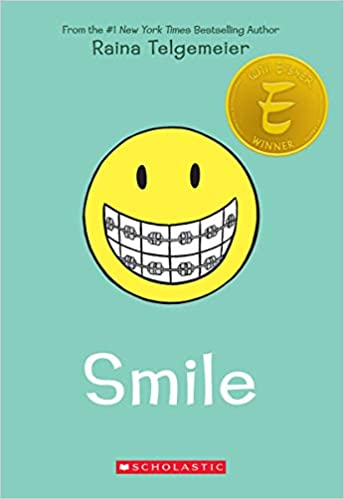
Back in 2000, librarian Teri Lesesne opined that younger readers had an ample array of humorous literature, but that it was in “terribly short supply” for middle-grade and high school students (p. 60). That was 26 years ago, and for middle-grade students in the decades since then, humorous literature has become particularly notable. For example, bestsellers include Jeff Kinney’s Diary of a Wimpy Kid, Raina Telgemeier’s Smile, Lincoln Peirce’s Big Nate, Dana Simpson’s Phoebe and Her Unicorn, Tom Angleberger’s Origami Yoda, and Rachel Renée Russell’s Dork Diaries. Yet, while humorous literature for middle-graders has become plentiful, I haven’t noticed a similar shift in young adult literature.
In 2010, librarian Alison Follos opined that “humor is the missing ingredient in middle and high school education” but that it’s not the type of book with which teachers and librarians “overload [their] stacks” (p. 37). In a short article from Kirkus in 2018, one YA editor wrote of fond memories of humorous YA lit from her youth, but remarked that these days, “funny young adult books are strangely thin on the ground” (Simeon, para. 2). And in the recent 2022 SLJ article “Show Me the Funny,” Emily Mroczek-Bayci remarked that “doom, gloom, and romance” are what take up most of the shelves in the YA section, leaving little room for anything else, let alone humor. The librarians cited in her article beg publishers for more humorous YA lit, feeling it has dwindled over the years (pp. 30–32). The professionals—librarians, publishers, and reviewers alike—all articulate a lack of humorous young adult literature as both a present reality and as a problem to be solved.

Is It Because Teens Don’t Like Humorous Books Anymore?

To tackle this first possibility, I looked for any recent studies that could tell me about teens’ reading preferences regarding humor. Unfortunately, data is limited. The most recent “evidence” purporting teens’ preference for humor is from 2022, and the evidence is anecdotal. Librarians point to the enormous popularity of humorous middle-grade books—for example, the Diary of a Wimpy Kid series, which has spent hundreds of weeks at the top of the NYT bestsellers list—and argue that kids’ love of humor doesn’t suddenly disappear when they hit teenage status (Mroczek-Bayci, 2022, p. 30).

The next discussion of humor and teens that I found was from an entire decade earlier. A casual 2012 report looked at twelve- to eighteen-year-olds in one book club who self-selected books to review. The books that teens said were funny were more than twice as likely to be reviewed as the books they said were sad. Since self-selection implies favoritism, the author determined that the teens were drawn to funny literature (Herald, p. 216). In 2009, Publisher’s Weekly surveyed teens to determine their reading preferences. Sadly, the survey failed to ask about humor. However, in a subsection asking about favorite elements of graphic novels and manga, teenage responders picked humor as their second favorite element, only defeated in the polls by romance (Fitzgerald, p. 23). While there’s scholarly literature about teens’ relationship with humor from the ‘80s, ‘90s, and ‘00s, it seems to have almost completely disappeared in the last 15 years. Why have scholars stopped surveying teens to determine what they like to read? 
One possibility is that we’ve pivoted to sales numbers to determine young adult preferences. Yet, there may be serious issues with this approach: According to WordsRated statistics from January 2023, 55% of YA lit buyers are over 18 years old. And lest one believe this crowd is buying YA lit for the teens in their lives, 78% of them say they’re buying it for themselves. If publishers, librarians, teachers, authors, and scholars are looking to sales to determine what teens like, they’re making a mistake. What they’re really seeing is the reading preferences of adults. In fact, of the YA lit buyers over 18, 51% are between 30 and 45 years old (Curcic, “YA consumer structure”). Maybe it’s naïve to believe that publishers should consider something more than sales statistics when determining what YA lit to offer. And yet, shouldn’t young adults’ book tastes be important to YA publishing divisions? Teens’ book preferences seem to be ignored or, at best, only partially considered. Noting this lack of teenage preferences should be important for us, especially if we are hoping to listen to and be respectful of teenage wishes.

Is It Because Publishers Don’t Want to Publish Humorous Books?

I begin this section with an anecdote from a colleague who is a published author. This colleague wrote a funny story that he submitted to publishers, but none of them chose to pursue his manuscript. The response was either, “I thought it was hilarious, but the rest of my team didn’t get it,” or “My team thought it was funny but I didn’t get it.” If everyone at the table doesn’t find the manuscript funny, publishers may fear that it won’t land with teens. But humor isn’t one-size-fits-all. Young adult author David Lubar explains it well:

Tragedy is universal. Comedy is subjective. If a novelist throws a dog under the wheels of a truck, every reader will feel sad. If the truck is an Oscar Mayer Weenermobile, some people might find that funny. If the hot dog truck swerves, misses the dog, and runs over a pack of PETA members, a different group of readers might be amused (Gill, 2007, p. 63).

If publishers are waiting for the funny book that pleases everyone, they’re going to be waiting for a long time. 

And yet, as stated earlier, unabashedly humorous middle-grade fiction is immensely popular. In an article published in February of 2024, Publisher’s Weekly observes the year’s trending topics in books for children and YA. Unsurprisingly, “books with humor have been popping” (O’Sullivan, 2024, “Tracking trends”). Yet, PW only mentions this trend with an eye toward picture books and middle-grade graphic novels. Although unabashedly humorous books for teens would surely be written differently than unabashedly humorous books for middle-grade kids, if humor is trending in middle-grade, I can’t help but wonder why publishers don’t see its potential popularity for teens.
​
Admittedly, I had difficulty finding answers to this question. One lead was an editorial piece about humorous novels for adults published in the UK. The editorial opined that despite humorous literature’s “enormous popularity with readers,” publishers are cautious. Why? Because while humor can be funny, some people can also find it offensive (Larman, 2020, para. 4). An author writing a character who tells an off-color joke may be criticized as sharing their character’s viewpoint. No publisher wants to be accused of promoting hate speech, an allegation that could spin out of control and cause serious damage to the reputation of a publishing house.

And yet, if causing offense is the worry, Alleen and Don Nilsen—the godparents of academic humor studies in the US—believe that this can be avoided. In their “Humane Humor Rules,” they provide the following guidelines:

A. Never target the victim,
B. Always target an individual’s strength, not weakness,
C. Never target a quality that a person can’t change (such as gender, ethnicity, etc.),
D. For tragedies and major embarrassments, allow for emotional and temporal distancing,
E. Don’t offend your audience; sometimes self-censoring is necessary  (Wilkie, p. 116).
​
It’s true—humor can hurt and demean others but, if used appropriately, laughter can also be healing. 

Is It Because Librarians Don’t Like Humor?

Recently, I attended a lecture about teaching YA lit to college students. The professor talked about a new difficulty in her YA lit class—namely, that a large percentage of students didn’t manage to read the required YA books, citing seasonal depression and the books’ triggering content. All of the books on the professor’s required list addressed important issues like the Holocaust, rape, and racism. All of the books were also well-respected pieces of YA lit. Reassuring her students that all of the books ended hopefully didn’t seem to help.  Another colleague at the lecture, knowing that I was studying funny YA lit, asked if I knew of any funny books that could mitigate the effects of so many serious, difficult books. “Is there actually any funny YA out there that’s literary enough to add?” the lecturing professor asked. She seemed surprised when I told her that there were several I could recommend. 
The sentiment that funny books are neither educational nor literary isn’t new. In her 2010 article, librarian Alison Follos dared other librarians to help change the perception that humor is lesser literature. “Clever wit,” she added, “often addresses the most compelling themes” (p. 37). Take Libba Bray’s Beauty Queens, for example. The author self-describes the book as a discussion of misogyny, corporate influence in American politics, the commodification of society, society’s homogenization, and the effects of these topics on teens’ “self-esteem, racial and cultural identity, sexual orientation, gender expectations, and unrealistic norms of beauty” (Herald, 2012, p. 217). Hearing this list of heavy topics, you might assume that Bray wrote a very heavy piece of fiction. Yet, according to the review journals, this book was a clever, funny literary success, its difficult themes written in a highly readable story about teen beauty queens stranded on an island (Dobrez, 2011; Heppermann, 2011; Kirkus, 2011; Publisher’s Weekly, 2011; Tran, 2011).
Picture
In exploring librarians’ perceptions of humorous YA lit, I also decided to take a look at Printz Award winners and honor titles. The Printz Award is one of the most prestigious awards for YA books, awarded yearly by the American Library Association to a title that exemplifies literary excellence. Since its establishment in 2000, the award has had 27 winners and 111 honor titles. I wanted to know how often, if ever, the Printz had been awarded to funny books. Since I couldn’t read each title myself, I used professional book reviews and reader reviews from Goodreads to decide whether the books I hadn’t already read merited a place on the funny list. I looked at top reader tags like “funny” and “humor” to determine whether readers thought that humor was a major element in each title.
I found that in the award’s 25-year history, two humorous YA books were winners: Going Bovine in 2010 and American Born Chinese in 2007. Additionally, ten humorous books were honor titles over the years: Grasshopper Jungle in 2015, Dodger in 2013, Tales of the Madman Underground in 2010, both The Disreputable History of Frankie Landau-Banks and Nation in 2009, Repossessed in 2008, An Abundance of Katherines in 2007, both Fat Kid Rules the World and The Earth, My Butt, and Other Big Round Things in 2004, and Angus, Thongs, and Full Frontal Snogging in 2001. In total, twelve funny YA books have managed to make it to the top of a prestigious literary list. The Printz committees responsible for recognizing these titles didn’t find humorous YA lit synonymous with lesser literature. Yes, funny and literary YA books do exist and are acknowledged by the librarian community.
I did find it interesting to compare the frequency of humorous lit that made the list in the ‘00s (7 titles) with the past ten years (0 titles). The difference felt substantial. But librarians have already proved that they would give the Printz to humorous titles that merited it. I suspected that the lack of humorous titles winning the Printz in the past ten years may have had more to do with a decrease in the number of humorous books being published than from librarians’ sudden distaste for humor. 

Is It Because Authors Aren’t Writing Humor?

In editor Laura Simeon’s short article from 2018, she began with recent news regarding the Wodehouse Prize. The Wodehouse Prize is arguably the most prestigious award given to authors of humorous literature for adults. In 2018, the judges announced that no book submitted that year had been funny enough to merit a place on the shortlist, let alone declared the winner. Simeon wondered if the lack of humorous literature (such as her favorite book as a teen, The Secret Diary of Adrian Mole Aged 13¾ was “a sign of our times” (para. 1). A discussion of the 2018 Wodehouse prize ordeal found in The Guardian posited another interesting insight: that while lighthearted, carefree Wodehousian comedy is on the decline, authors are still writing books that have funny parts—they’re just primarily about dark and unhappy subject matter (McAloon, 2018, para. 2). It felt to me like Simeon and The Guardian were saying something important.
Picture
To test this theory, I decided to study the YA books of fiction that I’d read with publication dates from within the last 15 years—196 books in total. Then, I starred books that I’d reviewed that included words like “laughed,” “funny,” and “humor.” There were 19 YA titles that included something I found funny—this amounted to 11% of the 196 books. Of these 19 titles, 9 included difficult subject matter: death of parent(s), cancer, antisemitism, gun violence, depression, grief, body shaming, racism, islamophobia, ableism, physical abuse, verbal abuse, poverty, and death of a friend. Of the other 10 titles, 7 were recommended for middle-graders and younger teens. Only 3 humorous YA titles recommended for teens of all ages did not include difficult subject matter, two of them written by the same authors (Appendix).
The humor found in the young adult books that I’d been reading seemed to corroborate The Guardian’s insight: Authors had been writing humor in the past 10 years—I just hadn’t noticed because the books were primarily focused on dark subject matter. Of course, YA lit that tackles difficult subject matter with a sprinkling of humor isn’t anything new. For example, Staying Fat for Sarah Byrnes, a humorous YA novel about two wisecracking outcasts—one who is dealing with serious parental abuse—was a hit in 1993. The Pigman, another humorous YA novel, again about two funny teen outcasts who tragically burn bridges with their only adult friend, was published in 1968. I could add many, many others. YA lit that tackles difficult subjects with humor may be on the decline, but it doesn’t seem to be endangered. This is wonderful news! Author Joan Bauer notes that humor can breach topics that are “fiercely serious” and can bring teens “hope and redemption” (Lesesne, 2000). It’s comforting to know there are recently published books for teens that find humor, even in trying circumstances. Teens, and all of us, can appreciate a little uplift in difficult situations. 
Picture
Picture
Yet lighthearted, carefree humor for teens of all ages (for example, books like A Semester in the Life of a Garbage Bag or Angus, Thongs, and Full-Frontal Snogging) seems to have become exceedingly difficult to find since the 2010s. Some might argue that this type of YA literature doesn’t provide a mirror to the realities of a contemporary teen’s life, that it’s not as important for teens as funny YA lit that addresses hard topics. But sometimes, teens may want a break from the mirror and from the “death, doom, and depression” of other books. They want to laugh without reservations. If we take away humorous YA escapism, we take away an outlet (Cart, 1998; Vanesse, 2000). 
Picture
Picture
Curiously, several authors known in the past for their humorous YA escapism have disappeared from the YA sphere. Gordon Korman’s last YA novel, The Juvie Three, was published in 2008. Since then, he’s continued writing funny novels, but each one is firmly entrenched in middle grade. Janette Rallison, whose YA rom-coms were in high demand in the ‘00s, seems to have left YA behind and moved exclusively into adult chick lit. Maybe these authors and others like them got tired of writing YA and were looking for something new, or maybe publishers or the market itself pushed them out. In any case, there’s a hole on the shelf. Teens need authors and publishers to reinstate humorous YA escapism.
Picture

Areas for Further Study and Concluding Thoughts

Admittedly, my investigation of the current humorous YA lit climate has been brief and incomplete. Still, it has raised important questions: Where are the current studies about teens’ reading preferences? Is it possible for teen preferences to be given priority in the current market? Why the seeming reluctance to publish light, escapist humor in YA lit despite its enormous popularity for middle- and grade-school students? We still have work to do to answer these important questions. I’m grateful to the many teachers, librarians, and scholars in the past who have dedicated their time to understanding humorous YA lit. Now it’s our turn to fill the gap. 

References

Cart, M. (1998). Carte blanche: What’s so funny? Booklist, 95(8), 742.

Curcic, D. (2023, January 30). Young adult book sales statistics. WordsRated. https://wordsrated.com/young-adult-book-sales/

Dobrez, C. (2011). Beauty queens. Booklist, 107(18), 46.

Fitzgerald, C. (2009). What do teens want? Publisher’s Weekly, 256(43), 22–26.

Follos, A. M. G. (2010). Taking humor seriously. Library Media Connection, 28(4), 36–37.

Gill, D. (2007). True talent: An interview with David Lubar. Teacher Librarian, 34(5), 62–63.

Heppermann, C. M. (2011). Beauty queens. Horn Book Magazine, 87(4), 140–141.

Herald, D. T. (2012). A funny thing happened. Voice of Youth Advocates, 35(3), 216–218.

Kirkus Reviews. (2011). Beauty queens. Kirkus Reviews, 79(8), p. 677.

Larman, A. (2020, May 5). Where is the Waugh or Wodehouse of our time? The Critic. https://thecritic.co.uk/where-is-the-waugh-or-wodehouse-of-our-time/

Lesesne, T. S. (2000). A passion for humor: An interview with Joan Bauer. Teacher Librarian, 27(3), 60–62.

McAloon, J. (2018, May 17). Fiction remains funny – the best comedy is found in dark, unhappy novels. The Guardian. https://www.theguardian.com/books/2018/may/17/fiction-wodehouse-prize-comic-novels

Mroczek-Bayci, E. (2022). Show me the funny. School Library Journal, 68(6), 30–33.

O’Sullivan, J. (2024, February 2). What’s ahead for kids’ books in 2024? Publisher’s Weekly. https://www.publishersweekly.com/pw/by-topic/childrens/childrens-industry-news/article/94246-2024-children-s-publishing-outlook.html
​

Publisher’s Weekly. (2011). Children’s books: Fiction. Publisher’s Weekly, 258(45), 39–44.

Simeon, L. (2018, June 17). Where are all the funny YA novels? Kirkus Reviews. https://www.kirkusreviews.com/news-and-features/articles/where-are-all-funny-ya-novels/

Tran, A. (2011). Beauty queens. School Library Journal, 57(7), 92–93.

Vanesse, D. (2000). On taking ourselves too seriously, and other tragic mistakes. The ALAN Review, 27(2), 27–28. https://doi.org/10.21061/alan.v27i2.a.7

Wilkie, I. (2021). Short interviews. Comedy Studies, 12(1), 115–119. https://doi.org/10.1080/2040610X.2020.1850099

Book References 

Angleberger, T. (2010). The strange case of origami Yoda. Amulet.

Barnes, J. (2009). Tales of the madman underground. Viking Books for Young Readers.

Boynton, S. (1984). Blu
e hat, green hat. Boynton Bookworks.

Bray, L. (2009). Going bovine. Delacorte Books for Young Readers.

Bray, L. (2011). Beauty queens. Scholastic.

Crutcher, C. (1993). Staying fat for Sarah Byrnes. Greenwillow Books.

Going, K. L. (2003). Fat kid rules the world. Penguin Books.

Green, J. (2006). An abundance of Katherines. Dutton Books for Young Readers.

Hand, C., Ashton, B., & Meadows, J. (2016). My lady Jane. HarperTeen.

Jenkins, A. M. (2007). Repossessed. HarperTeen.

Jerome, J. K. (1889). Three men in a boat (to say nothing of the dog). J. W. Arrowsmith.

Kinney, J. (2007). Diary of a wimpy kid. Amulet.

Korman, G. (1987). A semester in the life of a garbage bag. Scholastic.

Korman, G. (2008). The juvie three. Hyperion Book.

Lockhart, E. (2008). The disreputable history of Frankie Landau-Banks. Little, Brown Books for Young Readers.

Mackler, C. (2003). The earth, my butt, and other big round things. Candlewick Press.

Peirce, L. (2010). Big Nate: In a class by himself. HarperCollins.

Pratchett, T. (2008). Nation. Doubleday.

Pratchett, T. (2012). Dodger. HarperCollins.

Rallison, J. (2006). It’s a mall world after all. Walker Books for Young Readers.

Rennison, L. (1999). Angus, thongs, and full frontal snogging. Piccadilly Press.

Russell, R. R. (2009). Dork diaries: Tales from a not-so-fabulous life. Aladdin.

Simpson, D. (2014). Phoebe and her unicorn. Andrews McMeel.

Smith, A. (2014). Grasshopper jungle. Dutton Books.

Telgemeier, R. (2009). Smile. Scholastic Graphix.

Townsend, S. (1982). The secret diary of Adrian Mole, aged 13¾. Methuen Books.

Yang, G. L. (2006). American born Chinese. First Second.
​
Zindel, P. (1968). The pigman. Bantam Books.

Appendix
​YA Books with Heavy Themes and Humor that I’ve Read (Published in the Last 15 Years):

Blum, I. (2022). The life and crimes of Hoodie Rosen. Philomel Books.

Bowling, D. (2017). Insignificant events in the life of a cactus. Sterling Children’s Books.

Ellis, A. D. (2014). The end or something like that. Dial Books.

Feder, T. (2020). Dancing at the pity party: A dead mom graphic memoir. Dial Books.

Murphy, J. (2015). Dumplin’. Balzer + Bray.

Nayeri, D. (2020). Everything sad is untrue: (A true story). Levine Querido.

Reilly, K. J. (2021). Four for the road. Atheneum Books for Young Readers.

Schmidt, G. D. (2023). The labors of Hercules Beale. Clarion Books.

Stevenson, N. (2015). Nimona. HarperTeen.

Appendix
Funny YA Books I’ve Read (Published in the Last 15 Years):

Craft, J. (2018). New kid. Quill Tree Books. (Younger teens)

Craft, J. (2020). Class act. Quill Tree Books. (Younger teens)

Fahmy, H. (2021). Huda F are you? Dial Books.*

Hand, C., Ashton, B., & Meadows, J. (2016). My lady Jane. HarperTeen.*

Hand, C., Ashton, B., & Meadows, J. (2021). My contrary Mary. HarperTeen.*

Martín, P. (2023). Mexikid. Dial Books. (Younger teens)

Morita, K. (2020). I’ve been killing slimes for 300 years and maxed out my level. Yen Press. (Younger teens)

Muth, J. J. (2019). Stanislaw Lem’s the seventh voyage. Graphix. (Younger teens)

Santat, D. (2023). A first time for everything. First Second. (Younger teens)
​

Stroud, J. (2021). The outlaws Scarlett and Browne. Knopf Books for Young Readers. (Younger teens)

Trojan Horses and Real Talk with Rex Ogle

7/15/2026


Meet our Contributor:

Julie Hoffman, Ed.D. (@HoffieCup) is a Literacy and Social Studies Teacher Instructional Leader (TIL) with Springfield Public Schools. She is also an adjunct professor in the Teacher Education Program and the Department of English and Modern Languages at University of Illinois Springfield.  She earned her Doctor of Education in literacy from Judson University in 2018. She is currently President of the Illinois Reading Council (IRC). Her research interests include urban education, social and emotional learning, young adult literature, poetry, and empathy.  She believes that children’s literature and poetry can be a message of perseverance and hope and believes that we thrive when we invest in ourselves and others.
Picture

Meet Rex Ogle:

Picture
REX OGLE is an award-winning author of more than a hundred books, comics, graphic novels, and memoirs—most notably Free Lunch (winner of the ALA/YALSA award for Excellence in Non-Fiction), Abuela Don’t Forget Me (ALA/YALSA award for Excellence in Non-Fiction finalist), Road Home (a Micheal Printz Honor and Stonewall Honor book), and middle grade graphic novels Four Eyes and Pizza Face.  
Under his pseudonym REY TERCIERO, he also re-imagines classics as modern and diverse graphic novels, including Meg, Jo, Beth, & Amy, Northranger (nominated for both Harvey and GLAAD Media Awards), and Dan in Green Gables (nominated for a GLAAD Media Award).
Born and raised in Texas, Rex now lives in Los Angeles where he writes every day—when he’s not reading X-Men, gaming with friends, or chasing his dog, Toby, trying to score a hug.

Trojan Horses and Real Talk with Rex Ogle
An interview by Julie Hoffman with Rex Ogle


​Julie: Hi, Rex, Thanks for spending some time with me.
 
Rex: Hi, it’s good to see you.
 
Julie: Okay, Let’s dive in. So many books, so little time. I want to focus on your YA, mostly, but I know you have a new book that just came out. Absent. Let’s start with that.
 
Rex: Well basically, doing  all of these school visits— talking to students and  teachers and librarians— I was asking, “What are some of the biggest problems kids are facing today?” And it seemed like the two biggest ones right now are not going to school and social media. And I was like, ‘Well, social media is big to tackle. But, I know about not going to school. For me, when I was a kid I was not always able to make it to school because my parents were out looking for jobs. It was my job to take care of my brother who was 10 years younger than me.  And of course I'd go to school and my teachers would be like, “You’ve missed two or three days,” and I would be like, “Yeah, and I did all my homework. I can ace the exam.” But they would just frown at me, like, they were really judgy about it. I was so young, and I didn’t have the voice to explain, “Hey, I’m not making it to school for reasons that are out of my hands.”
 
So I started thinking about that, and came up with the idea for Absent.  Three different boys living under the poverty line who cannot make it to school for three different reasons. One because he's being bullied within an inch of his life. One because he has two brothers he has to take care of and he can't make it to school on time. And the third one because his dad's in jail and his favorite teacher quits, so he feels like no one loves him. Because I know some kids aren’t “readers” yet, I wanted to play with the format.  Since I already write novels and novels-in-verse and graphic novels, I was like, “Let's put all three in one book.” Three protagonists—three formats. One kid wants to be an artist, so his story is in comic books. One  kid wants to be a songwriter, so his story is in rap lyrics.  And the third kid wants to be a doctor, so he keeps a journal.
 
I'm very very excited. I mean, I love all of my books, but this one is just like my little baby. 
Picture
Julie:  I love it! So with the graphic novel part, did you write the text  and someone else illustrated it?
 
Rex:  Yes, I cannot draw to save my life. I always work with other artists, and it's good. For the comic book artist it is a Black student, and I was like, “I don't feel comfortable directing exactly how the images will be. I want to find an artist who can convey the relationship between the boy and his father, because I thought that was important. And then, I’m half white and half Mexican, so the other two kids are Mexican and white.

Julie: Yes, yes. What’s funny is that In this conversation I definitely planned to talk through Memoir, and I was also wanting to talk about, like, exploring different formats. So now, well, you just covered all of it! Let’s keep going with Memoir, because I feel like that was kind of the beginning for you. You and I have talked about, well, at least two of your memoirs, so far. I told you how I couldn’t even make it through the foreword of Don't Forget Me, Abuela. We also talked about Road Home, and some of our kindred-spirit stuff.  Let’s go back to the beginning and talk about “the Memoir that you didn't want to write” and how that kind of became a place to write your story and it became a place of healing.

Picture
Picture

Rex: So, as you know, at one point I was like well, I never wanted to write this stuff.  I always wanted to be a writer, but I wanted to write fantasy or sci-fi or comic books. I love superheroes! That's the stuff I grew up reading, because with what I was dealing with at home, poverty-domestic-violence-home-instability-food-insecurity-etcectra-etcetera, I needed those books to escape from the real world. So growing up, I wanted to create books for others to read and escape from reality. Reality is a lot sometimes. It can be exhausting. It can be traumatic. It can be heavy. I wanted to give people an escape the way I had an escape.
 
Coming from where I came from, I didn't think I could do it on my own. I was rejected by all the MFA creative writing programs I applied to, which led me to move to New York City with a thousand bucks and a double bag, and I was like, “I'm going to work in book publishing. I'm going to learn everything about how to be a good writer because, obviously, I don't know.”
So, while I was in New York, I wrote 18 novels  and 21 comic book series. Every single one? Rejected. It sucked. But . .. I think it was the Universe pushing me to write something that was not sci-fi, that was not horror, that was not Escapist. It wanted me to write something real, and that's why I wrote Free Lunch. And then you know, my publisher was like, “Do you have any other stories?” [Laughs] Yeah. Yeah, I have other stories! After Free Lunch, I promised myself that was it. But . . . then I wrote Punching Bag. And then I was like, that is it. But then I wrote Abuela, Don’t Forget Me when my abuela got dementia. And then he finally talked me into writing Road Home, and I was like, “That’s it! I’m done! No more memoirs!” And then I signed up with Scholastic to do a trilogy of memoirs for middle school. [Laughs again]
Picture
Picture

What Followed


Rex: Four Eyes, Pizza Face, and Fruit Cake (which just came out in April) is a graphic novel trilogy. It's 6th grade, 7th grade, 8th grade. Even though they take place at the same time as Free Lunch and Punching Bag, that is not the thesis. I wanted to give kids who are not ready for Free Lunch or Punching Bag a different story. It’s still me. You'll see the same characters. And you’ll see the poverty. Poverty is important for kids to see. In the first book, like, getting glasses? That was a huge deal for me because my family didn't have money for glasses. We basically had to beg my dad, who had left when I was five. That's not a good feeling—to feel like you have to beg for stuff when you’re a kid. 
Picture
Picture
Picture
Rex: Then with Pizza Face, all my friends were on Clearasil and acne medication. I didn't have that option. So again, what I like is that I am writing memoirs that address one thing but they're talking about something else that I think is even more relatable. So many people in our country are living below the poverty line.
 
Julie: Yes, yes. I love that. I feel like even in your memoirs, I know that at first you were like, “I don't want to dip into the painful stuff. I don’t want to go there, or write something real.” But I also think, and I say this when I talk about authors who write for kids and write for teenagers, the books have that resilience and hope. The person who writes the memoir has the survivor story and gets to tell the story. Like, you made it. You're still here with us, and I'm so glad. I think that for your audience you always seem to make sure that you include that resilience and hope. So, in your story of. . . well, some really tough things that you've been through, how do you make sure that you include that?
 
Rex: I mean it's hard because I feel like with Punching Bag, like that was my Empire Strikes Back. Like, in the trilogy of Free Lunch, Punching Bag, Road Home, that was kind of a sad ending. I wanted there to be hope, but I wanted to be honest with my readers. Like, this is hard when there is violence in the home. It is hard, and it does not go away. There's not a happy ending at the end. But I can write an afterword. So, if the narrative itself is heavy, and doesn't necessarily have a happy ending, I still put the afterword. I survived this, you know. We can all survive whatever the world throws—I mean, see, even that? I want to self-correct, because some people don't survive everything the world throws at them. This world is hard. But I do hope that, you know, with all my books, that there is kind of a through line for readers. There are ways that you can help yourself. There are ways you can lean on resources that are out there. You know, if you have one family member that can help, lean on them. If you have one friend that can help, lean on them. We're all in this together. It's hard. Ugh. Sorry. I know I keep saying that life is hard. 
​Julie: It is, though. It is. I was thinking about when you said, “I want to self-correct” and how some of us don't survive. I was like, well, in fact, none of us do. Like, not one of us. 200 years from now, you are not going to be here. And, I'm not going to be here. None of us. But how do we make it more tolerable, and sometimes even joyful? When we're here, and it's all of those things you listed—leaning on each other. That's where the resilience and hope is. It is in each other.
 
Rex: Yeah, yeah.

Pen Name and Other Projects


Julie: Yeah. Okay, now let's talk about your pen name and some of your other books.
 
Rex: Rey Terciero. Fun fact. . . a lot of my pen names, I have like eight. [both of us laugh] Really, I only count Rex Ogle and Rey Terciero. All the other ones I was doing for work for hire back when I needed extra paychecks. Working in publishing, I made like zero dollars. I mean, making $35,000 in New York City is not a lot of money. So I did all this writing under pseudonyms.I was not supposed to be writing for other publishing houses, because it was considered a conflict of interest. And I'm like, “I gotta pay the bills.” So, I kept making up pen names and Rey Terciero is one of the ones that stuck. I got this idea to start doing classic reimaginings as graphic novels. The first one was Little Women—Meg, Jo, Beth, and Amy. My co-creator, Bre Indigo is Black and they wanted a Black family. I was like, “Well, I can't write all of that, but how about we create this story together?” So, it's a mixed family, and of course there's a queer character. It’s like a modern day Little Women. This is more realistic to what people are going through. It’s part of what I am doing with Dan in Green Gables, which is Anne of Green Gables, but with the queer character. Northranger which is Jane Austen's Northanger Abbey, or coming out next year, Count of Monte Cristo High. I want to reimagine these stories where kids are at. Twenty years of rejection pushed me. It was “Stop writing what you think will make you a New York Times bestseller, and start writing the books that you wanted to read as a kid.” As a kid I wanted to read comic books. I wanted to read graphic novels. Apparently that aligns with what kids want to read today. Maybe if they like Dan in Green Gables, they'll be like, “What's Anne of Green Gables?” In the back of every single one, I make sure that there is room for back matter, meaning an author letter about why I wrote it, then a page about the author, and a page about the original work. 

To me that's very important. I want kids to be able to explore, to be like, “Ohh, this has an origin that I had no idea about!” 

Picture
Picture
Picture
Julie: I love Dan. Do you have other classics that you're thinking about doing this with? I know you're super busy, and you're writing a ton, but like, do you have kind of a running list of eventual titles? And are we allowed to know?
 
Rex: I'm pulling up my spreadsheet now for you. I won't tell you everything. What I can tell you: The Odyssey: Long Way Home is an anthropomorphic version of the Greek Odyssey, but in the very first scene Odys, who is a little mouse. Odysseus—Odys—throws down a sword and he promises the gods he will never kill again. He will never do violence against another person again. They're like, “Ohh. Try to get home without using violence.” So, it's him fighting against his own need to hurt other people the entire way home. I actually wrote it in 2019, and the artist is still drawing it. It is beautiful—stunning. I don't know when it's coming out. It may be a minute. Let's see, what else am I working on? I'm working on a four part Jane Austen series that I cannot tell you about, even though I just said it. I have a list of some of my favorite books. I'll just tell you the original names: Romeo and Julie:t, Wuthering Heights, Scarlet Letter, Macbeth. I want to do something with all the monsters: Frankenstein, Dracula . . .

Julie: That would be a really cool series.


Rex: Yeah, I have another idea involving social media. What I love to do is like, Trojan horse some important messaging into books. I'm getting a tattoo of a Trojan horse soon, because I feel like that's what I've done my whole life.  I present very white. I present straight. I present, I mean, maybe not wealthy but  . . . I feel like my whole life I've been kind of Trojan horsing myself into helping myself. and now I'm trying to Trojan horse myself into helping others. 
​Julie: That is totally the vibe that I got from you the very first moment that I met you in person.

Rex: That I’m a Trojan horse? [Both laugh]
 
Julie: No. That you present as someone who is constantly doing the work to be the best, toward-healing human being that you can. And you write so that kids can find healing in stuff too. So yeah, Trojan horse. 
 
 
Rex: I mean, not to be too serious, but the way I look at it is if it weren't for my abuela, if it weren't for books and stories, if it weren't for educators and librarians and teachers who encouraged me—it certainly wasn't my parents—if it was not for those people, I'd be in prison. I'd be dead in a ditch. I wouldn't be here. So as far as I'm concerned, it is my job to pay it forward. I feel like my abuela, who passed a few years back, is always in my ear being like, “No, you're not going to do that to make money. You're going to  write this book over here instead, to help kids.” 

When We Ride


Julie: OK, so earlier you were talking about writing in different formats, and I love that you went there with a YA novel. Tell us about that decision, that journey, that whole process.
 
Rex: So, when I wrote When We Ride, you know, I had sworn off memoirs. I went to my publisher and I was like, “My senior year is a really good story.” He was like, “I thought you said, ‘No more memoirs.’” So, we had a conversation about it. He liked the concept but the ending was all wrong. He's like, “Maybe you should go fiction,” and I was like, “I think you're right.” So, When We Ride is only 70% true. [Laughter] My senior year in high school I was living with my abuela. My best friend was a drug dealer. I used to drive him around to his drug deals because he did not have a car. I would sit in the car, doing my homework and filling out college applications, while he would go into college campuses and sell weed to college students. A lot of people were like, “Don't you know your best friend's a drug dealer?” I'm like, “Yeah.” They thought that made me a bad person by association. I was like, “Why is he a bad person?” They didn't know his life circumstances—why he was doing it. His mom has no job and we lived in Abilene, TX which is a small town, and a college town. There were no jobs. The college students sweep them all up because there's three universities. So, he pays his bills. He has a little brother to take care of. He puts food on the table. He is a 17 year old teenager. What else is he supposed to do? He hasn't failed society. Society has failed him. 

Picture

Julie: Wow. Yes.
 
Rex: The point of the book that I want readers to take away, well,  two things. One, when you look at someone who you judge, I want you to think about why you are judging them, and maybe what’s their real truth. Two, and maybe more importantly, I also want the kid who's like me to know that you have to have boundaries. I loved him. He was like a
brother to me, but I had to draw boundaries. I was like, “I cannot jeopardize my future for your decisions.” His real name was Marshall. He would never have read prose.

And then, Tupac


Julie: Tell me more about Marshall.
 
Rex:  He loved Tupac.  When he used to hop into my car, he would pop a Tupac cassette tape into my radio. At first, I’d be like, “No, I don't like this music.” He was always like, “You're racist.” Oh, and by the way, he's white. That's the funniest part. Everyone assumes he's Black because he's a drug dealer. I say several times in the book he is white.

Julie: I picked up on it—blue eyes.
 
Rex: Yeah. There have been people who've been like, “Why did you decide to write about a black drug dealer?” and I was like, “Did you read the book?’
 
Julie:  Some of their own racism kind of peeked through a little bit.

Rex: Yeah, anyways, he loved Tupac. He made me read Tupac's song lyrics. You know when you fold out the cassette tape? I loved the words. The words were like poetry. When I decided to write When We Ride, I felt like writing a novel-in-verse. It's a good way of meeting kids where they're at.

 Julie: So, Tupac, he did write poetry. There's a whole anthology.
Rex:  It’s under my desk right now. [Holds the book The Rose That Grew From Concrete up to the camera].
 
Julie: Look at that! Tupac! Yes, um, I feel like making the story accessible to students who don't identify as a reader yet is exactly what your novel-in-verse does. Did Marshall read it?

Rex: Oh, Marshall passed away right after right after high school.

Julie:  Oh, I’m sorry.

Rex: He passed away from leukemia. This is one of the reasons why my publisher said my first ending was not a good ending. The cool thing is that I introduced him to my other best friend—the goody-goody girl that is in the book. She was vice-president of the student council. She was a straight-laced, good girl. They fell in love. They got married. Their daughter is my goddaughter. I did ask Casey and Madison's permission before I wrote When We Ride. I was like, “Is it okay if I put this out in the world? It's your story, too.” 

What's Next?


Julie: I’m glad they agreed. Thank you for writing it. I read it in a day, because . . . well, it's so good. So, what’s next? More YA?
 
Rex: So, I have 21 books under contract. Only about half of them are written [laughs] The next book that I have coming out, that I'm both really proud of, and I have nightmares constantly about the NRA coming for me. It's called American Gun. It is the story told from the perspective of a Glock 19 as it makes its way across America from 1988 to 2028, and all the lives that it affects along the way. So, it changes hands 16 times over the course of 40 years. I grew up in Texas, you know. I was taught gun safety at an early age. This book has been on the back of my mind for a while. Especially with all the school shootings. I'm very excited about this book. It's taken more research than most of my books. The history of guns, I've been reading old articles from the 70s, the 80s, the 90s talking about gun violence in America. What else am I doing in the YA space? The Count of Monte Cristo High. What else do I have that's coming up? Oh my gosh. so much middle grade.
 
Julie: I know. That’s wonderful, too. We have students in the middle that need your stories.
 
Rex: Oh. There's one that I started working on a few months ago. I won't tell you the title, but it is about the cross intersection of homophobia, toxic masculinity, sexual assault, and suicide. Those are four very very heavy topics, but I've had this story in the back of my mind for a while. I want to talk about what it means to be a man in America, and by man, I mean a teenage boy. People are putting up these videos that are influencing thousands, maybe hundreds of thousands, of boys in America with these really negative messages about what it looks like to be a man.  I just want to write books that give kids an alternative to that. I mean, obviously, I can't compete with social media, but I will try to put books in their hands that talk about the things that maybe other people aren't talking to them about.
Julie:  Love it! So, I'm going to ask one last question that'll be like the end of the article and then I'm going to stop recording and we're just going to talk for a little off the record.  You talked about being like a Trojan horse and getting a message to kids. You dip into how life is hard, and you're real. So, there are a lot of different messages overall that you have for our teenage readers. If you could just Trojan horse one last message for our teenagers, what’s the message?

Rex:  I want every teenager in the world to know to take care of each other. Take care of each other and take care of yourself.

Who Gets to Be a Person in Hamlet? Companion Texts, Verse Novels, and Writing Our Way to Understanding

7/1/2026


Dr. Melanie Hundley is a Professor in the Practice of English Education at Vanderbilt University’s Peabody College; her research examines how AI, digital and multimodal composition informs the development of pre-service teachers’ writing pedagogy.  Additionally, she explores the use of AI, digital and social media in young adult literature.  She teaches writing methods courses that focus on AI, digital and multimodal composition and young adult literature courses that explore diversity, culture, and storytelling in young adult texts. 
Picture
She teaches AI and literacy courses including AI and Storytelling. Her current research focus has three strands: AI in writing, AI in Teacher Education, and Verse Novels in Young Adult Literature She is currently the Coordinator of the Secondary Education English Education program in the Department of Teaching and Learning at Vanderbilt University’s Peabody College.

​Who Gets to Be a Person in Hamlet? Companion Texts, Verse Novels, and Writing Our Way to Understanding by Melanie Hundley

It is no secret that I love verse novels. As a reader, I am drawn to the way poetry slows me down and invites me to linger in a character's thoughts. As a teacher, I appreciate the opportunities verse novels create for students to notice how writers use language, structure, and silence to create meaning. As a teacher educator, I value the ways these texts help students move beyond summary and into interpretation.
 
Recently, while reading Hamlet with a group of students, I found myself returning once again to Joy McCullough's Enter the Body. McCullough's collection gives voice to Shakespeare's female characters, allowing them to tell stories that are often overshadowed by the narratives of the men around them. These poems do not retell the plays, rather, the poems enter into conversations with the events, with the characters, with the ideas presented. They invite readers to reconsider characters they thought they knew.  They ask the reader to ask, “What if…”
Picture
Picture

Reconsidering Ophelia

As the students and I moved between Shakespeare's play and McCullough's poems, questions began to emerge: What do we actually know about Ophelia? Who gets to be a person in Hamlet? Is Hamlet a good guy? The discussions around Ophelia, her role, and her personhood were particularly thoughtful. At first the question of whether or not Ophelia is a person seemed simple.  Of course she is.  She speaks. She appears in multiple scenes. She influences the actions of the play
 
But the more closely we read, the more complicated the question became. Students could easily identify what other characters say about Ophelia. They could point to Laertes warning her about Hamlet. They could describe Polonius instructing her how to behave. They could analyze Hamlet's contradictory declarations of love and rejection.
 
Yet when we looked closely at the text, students noticed something important. We know a great deal about what others think of Ophelia. We know far less about what Ophelia thinks of them.
Much of what we learn about Ophelia comes through the words of the men around her. She is advised, directed, protected, criticized, and used. She is important to the plot, but her interiority her private thoughts, fears, hopes, questions, and desires that shape her experience, often remains just beyond our reach. In many ways, Ophelia functions as a daughter, a sister, a love interest, a source of concern, a symbol of innocence, and eventually a symbol of tragedy.

Reading the Poetry

But when does she get to simply be a person? That is one of the gifts of Enter the Body.
 
McCullough enters the spaces Shakespeare leaves open. She invites readers to dwell in the limited space Ophelia is allowed to occupy and imagine what exists beyond it. Rather than asking what Ophelia represents, the poem asks who Ophelia might be.
 
To explore the poem, we read it three times. The first reading was as readers.
We asked:
  • What do we notice?
  • How do we feel?
  • What lingers with us after we read?
Students responded emotionally to the poem. They noticed Ophelia's confusion, heartbreak, and uncertainty. They commented on the tension in the dialogue and the impact of the white space on the page. This reading invited students to experience the poem before analyzing it.
The second reading was as scholars.
We asked:
  • What lines stand out?
  • What literary elements do we notice?
  • What can we say based on the evidence?
Students began identifying patterns. They noticed contradictions in Hamlet's statements. They examined repetition, dialogue, and structure. They discussed how the poem shifted attention away from Hamlet's emotional turmoil and toward Ophelia's experience of the interaction. Their observations moved from reaction toward interpretation.
The third reading was as writers.
We asked:
  • What does this text model?
  • What does it inspire?
  • How does it help me make sense of something?
This reading changed everything. Students noticed how McCullough used fragmented dialogue, white space, and layered voices to reveal a character's inner life. They began thinking about what stories exist between the lines of canonical texts. They considered what becomes visible when we enter the perspective of a character whose voice is often overshadowed by others. Most importantly, they began writing.  That third reading opened the door to some of the most interesting thinking of the unit.

Student Writing (Erica)

After reading Enter the Body, pp. 100-101, several students chose to write an updated high school version of the scene between Hamlet and Ophelia.  What would it look like now?  Erica wrote:
 
In the hallway, between classes
 
We passed each other and       paused,           
 
I said               I have remembrances of yours
                        things to give back
You said          I never gave you anything
The world of the hallway shrank and grew, fell silent, echoed with your words
                                    *I can’t breathe.*
I said               You know right well you did. Sweet notes, perfume, a poem, your t-shirt.
                        They were the best of gifts
                                                but not now.  Now, they mean…nothing.
You asked       Did you lie?
                        What?             *I can’t breathe.*
You asked       Were you faithful?
                        What? *I can’t breathe*
You said          I did love you…once.
                                    *I feel like I am drowning*
I said               You made me believe you did…but now…
You said          You shouldn’t have believed me
                        I didn’t love you.
                                    *I feel like I am drowning*
I thought         You were the liar.
You said          Women lie and cheat and make monsters of men.
                        You paint yourself as sweet and you are just a whore.
                                    *I feel like I am drowning*
I thought         I am not the one who pretended to love, who gave false words and false gifts. 
                        Is it his grief? Or is he really just a jerk?
                                    I feel like I am drowning*  
Erica’s poem opens, “In the hallway, between classes/We passed each other and paused” and quickly establishes the emotional intensity of a public breakup.  We see the speaker’s confusion when the male partner in the breakup denies doing things she knows he did and then her pain when she is accused of things she did not do.  Throughout the poem, Erica includes the repeated lines “I can’t breathe” and “I feel like I am drowning.” These refrains function as both an allusion to the play and an interior voice running alongside the spoken dialogue.  Much like McCullough’s poem, Erica’s writing invites readers to do more than observe the interaction. She invites them to experience its emotional impact.
 
At first glance, Erica's poem appears to be a contemporary adaptation of Ophelia's encounter with Hamlet. But as I read it more closely, I realized she was doing something much more sophisticated. She was developing an interpretation. The poem captures a painful interaction between two people, but it also highlights something central to both Shakespeare's scene and McCullough's reimagining: the denial of shared experience. Just as Hamlet denies the letters and affection Ophelia remembers, Erica's speaker encounters someone who refuses to acknowledge a shared history. The poem also foregrounds the gendered accusations present in the original text. By the end of the piece, the speaker is confronted not only with rejection but with blame and dismissal.

Student Reflection (Erica)

What fascinated me most, however, was Erica's reflection on the writing process. After composing the poem, she wrote:

I was really thinking about Ophelia and wanted to write my essay about her and how she was treated by Hamlet, her father and brother. But I struggled to figure out what I wanted to say. I did poem pre-writing and that helped me think about how Ophelia is treated by the men in her life: she is used as a tool by her father, she is discarded as a girlfriend by Hamlet, and she is dismissed by her brother as unimportant. She doesn't matter to them until she is dead and then they think about her as a person. And even then she is more of a symbol than a person.  She is never fully real to them.
​
I keep returning to this reflection because it reveals something important about writing and learning. The poem was not simply evidence of Erica's thinking. The poem helped create her thinking. At first, Erica was thinking about Ophelia's feelings.  By the end, she was developing a theory about Ophelia's position within the play. She noticed that Polonius uses Ophelia as a tool.
Hamlet discards her when she no longer serves his needs. Laertes dismisses her concerns and agency. What began as individual moments became a larger pattern. By the time Erica wrote her reflection, she was no longer simply asking whether Ophelia was treated unfairly. She was asking whether Ophelia was ever allowed to exist as a full person in the eyes of the men around her.
 
Her observation is powerful: Ophelia doesn't matter to them until she is dead. Erica then pushes the idea even further. Even after Ophelia’s death, she is still more of a symbol than a person.  This insight takes us back to the question that started our reading. Who gets to be a person in Hamlet?  While many students focused on the women in the play, several did ask whether Hamlet was allowed to be a fully formed person or whether he was more of a symbol as well. 

Student Writing (Cory)

Cory wrote:
 
I know.
A crown. A throne. A story.A kingdom.
Everyone knows.
They tell it
over and over.
The murdered king. The usurping brother. The grieving son.
I know my lines.
Then speak them.
You ask as if
they belong to me.
As if I chose them.
As if I woke one morning
wanting blood.
As if grief and vengeance
are the same thing.
I know my lines.
The murdered king. The wicked uncle. The rightful heir.
The son who swears
and remembers
and kills.
I know my lines.
Everyone else does too.
The guards. The court. My mother. Even the audience.
They wait
for me to say them.
To become them.
To mean them.
Then why do you hesitate?
Because you were my father.
Because I cannot remember
the sound of your voice
without hearing
the command beneath it.
Because I miss you.
Because I am angry
that I miss you.
Because I want
one moment
to be a son
before I become
your weapon.
I know my lines.
But I do not know
how to speak them
with your ghost
standing inside my grief.
I know my lines.
I just didn’t write them.

Student Reflection (Cory)

Cory said, “Hamlet seems lost in most of the play. He is trying to figure out what to do when none of it seems to be what he wants to do or what he planned. Everything is coming at him from the outside, everybody’s expectations are piling on him.”  Cory’s observation feels like it gets at something essential in the play; he is focusing on the weight of the expectations on Hamlet.  Everyone wants something from Hamlet.  His father’s ghost wants revenge, Claudius wants obedience, Gertrude wants reconciliation, Ophelia wants honesty, Denmark wants stability, and the audience wants action.  Hamlet is constantly responding to demands rather than pursuing his own wants.  So when Cory says, “Everything is coming at him from the outside, everybody’s expectations are piling up on him,” he is describing a loss of agency that is surprisingly similar to what Erica noticed about Ophelia.
 
The difference is that Hamlet receives attention and authority while Ophelia receives marginalization and dismissal.  Yet both are trapped by roles assigned to them by others.  Ophelia is reduced to daughter, sister, and potential wife. Hamlet is reduced to son, prince, and avenger. Neither is fully allowed to exist outside those roles.

Final Reflection on Using Companion Texts

One of the reasons I continue to use companion texts such as Enter the Body is that they help students notice what literary analysis sometimes overlooks. They encourage students to ask not only what a character represents, but what has been left unsaid about that character's experience.
They invite students to enter the silences of a text. They encourage students to challenge whose stories are centered and whose stories remain at the margins. And, perhaps most importantly, they create opportunities for students to use writing as a way of discovering what they think.
 
For Erica and Cory, writing the poem was not preparation for literary analysis. the poem was literary analysis. It was through writing that they discovered their arguments. They did turn the poem into a well-developed essays, but the poem served as thinking and analysis for them. Sometimes the most important thing a companion text does is help students notice not what a character represents, but who that character might be. And sometimes the most important thing writing does is help students discover that person, too.  

    Dr. Steve Bickmore
    ​Creator and Curator

    Dr. Bickmore is a Professor of English Education at UNLV. He is a scholar of Young Adult Literature and past editor of The ALAN Review and a past president of ALAN. He is a available for speaking engagements at schools, conferences, book festivals, and parent organizations. More information can be found on the Contact page and the About page.
    Dr. Gretchen Rumohr
    Co-Curator
    Gretchen Rumohr is a professor of English and writing program administrator at Aquinas College, where she teaches writing and language arts methods.   She is also a Co-Director of the UNLV Summit on the Research and Teaching of Young Adult Literature. She lives with her four girls and a five-pound Yorkshire Terrier in west Michigan.

    Bickmore's
    ​Co-Edited Books

    Picture
    Meet
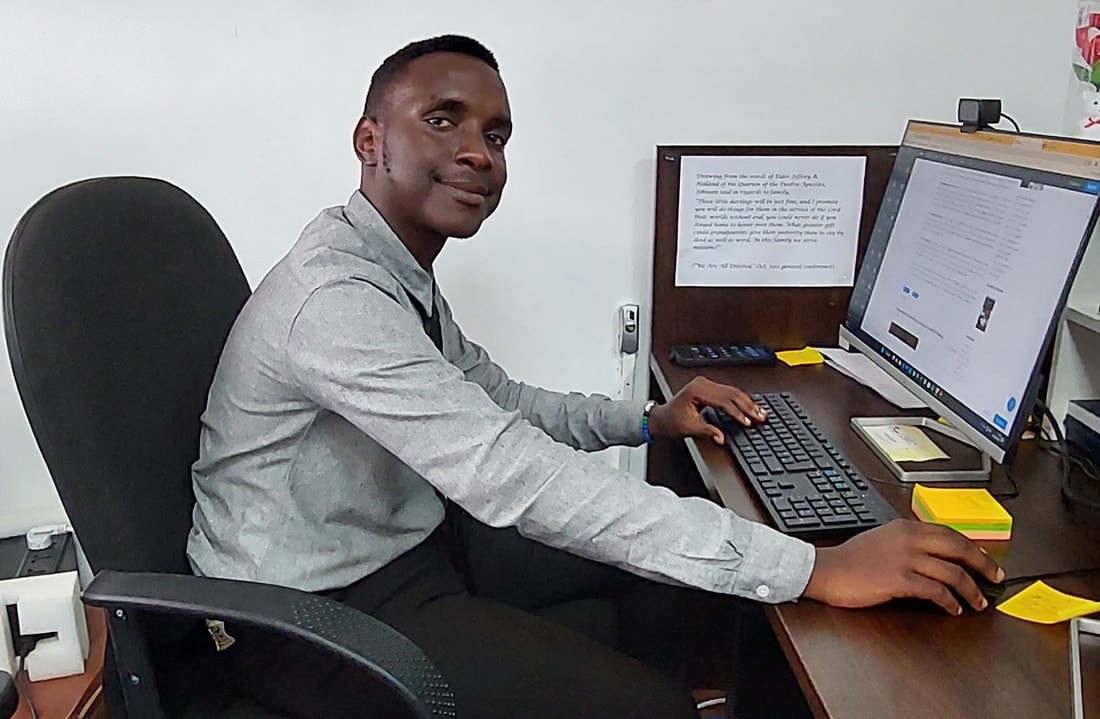
    Evangile Dufitumukiza!
    Evangile is a native of Kigali, Rwanda. He is a college student that Steve meet while working in Rwanda as a missionary. In fact, Evangile was one of the first people who translated his English into Kinyarwanda. 

    Steve recruited him to help promote Dr. Bickmore's YA Wednesday on Facebook, Twitter, and other social media while Steve is doing his mission work. 

    He helps Dr. Bickmore promote his academic books and sometimes send out emails in his behalf. 

    You will notice that while he speaks fluent English, it often does look like an "American" version of English. That is because it isn't. His English is heavily influence by British English and different versions of Eastern and Central African English that is prominent in his home country of Rwanda.

    Welcome Evangile into the YA Wednesday community as he learns about Young Adult Literature and all of the wild slang of American English vs the slang and language of the English he has mastered in his beautiful country of Rwanda.  

    While in Rwanda, Steve has learned that it is a poor English speaker who can only master one dialect and/or set of idioms in this complicated language.

    Archives

    September 2026
    August 2026
    July 2026
    June 2026
    May 2026
    April 2026
    March 2026
    February 2026
    January 2026
    December 2025
    November 2025
    October 2025
    September 2025
    August 2025
    July 2025
    June 2025
    May 2025
    April 2025
    March 2025
    February 2025
    January 2025
    November 2024
    October 2024
    September 2024
    August 2024
    July 2024
    June 2024
    May 2024
    April 2024
    March 2024
    February 2024
    January 2024
    December 2023
    November 2023
    October 2023
    September 2023
    August 2023
    July 2023
    June 2023
    May 2023
    April 2023
    March 2023
    February 2023
    January 2023
    December 2022
    November 2022
    October 2022
    September 2022
    August 2022
    July 2022
    June 2022
    May 2022
    April 2022
    March 2022
    February 2022
    January 2022
    December 2021
    November 2021
    October 2021
    September 2021
    August 2021
    July 2021
    June 2021
    May 2021
    April 2021
    March 2021
    February 2021
    January 2021
    December 2020
    November 2020
    October 2020
    September 2020
    August 2020
    July 2020
    June 2020
    May 2020
    April 2020
    March 2020
    February 2020
    January 2020
    December 2019
    November 2019
    October 2019
    September 2019
    August 2019
    July 2019
    June 2019
    May 2019
    April 2019
    March 2019
    February 2019
    January 2019
    December 2018
    November 2018
    October 2018
    September 2018
    August 2018
    July 2018
    June 2018
    May 2018
    April 2018
    March 2018
    February 2018
    January 2018
    December 2017
    November 2017
    October 2017
    September 2017
    August 2017
    July 2017
    June 2017
    May 2017
    April 2017
    March 2017
    February 2017
    January 2017
    December 2016
    November 2016
    October 2016
    September 2016
    August 2016
    July 2016
    June 2016
    May 2016
    April 2016
    March 2016
    February 2016
    January 2016
    December 2015
    November 2015
    October 2015
    September 2015
    June 2015
    February 2015
    January 2015
    November 2014
    October 2014
    September 2014
    August 2014
    July 2014
    June 2014

    Categories

    All
    Chris-lynch

    Blogs to Follow

    Ethical ELA
    nerdybookclub
    NCTE Blog
    yalsa.ala.org/blog/

    RSS Feed

Proudly powered by Weebly